
How to Flush a Water Heater to Fight Sediment Buildup
July 16, 2024 · 6 min read · By Red Eagle Plumbing
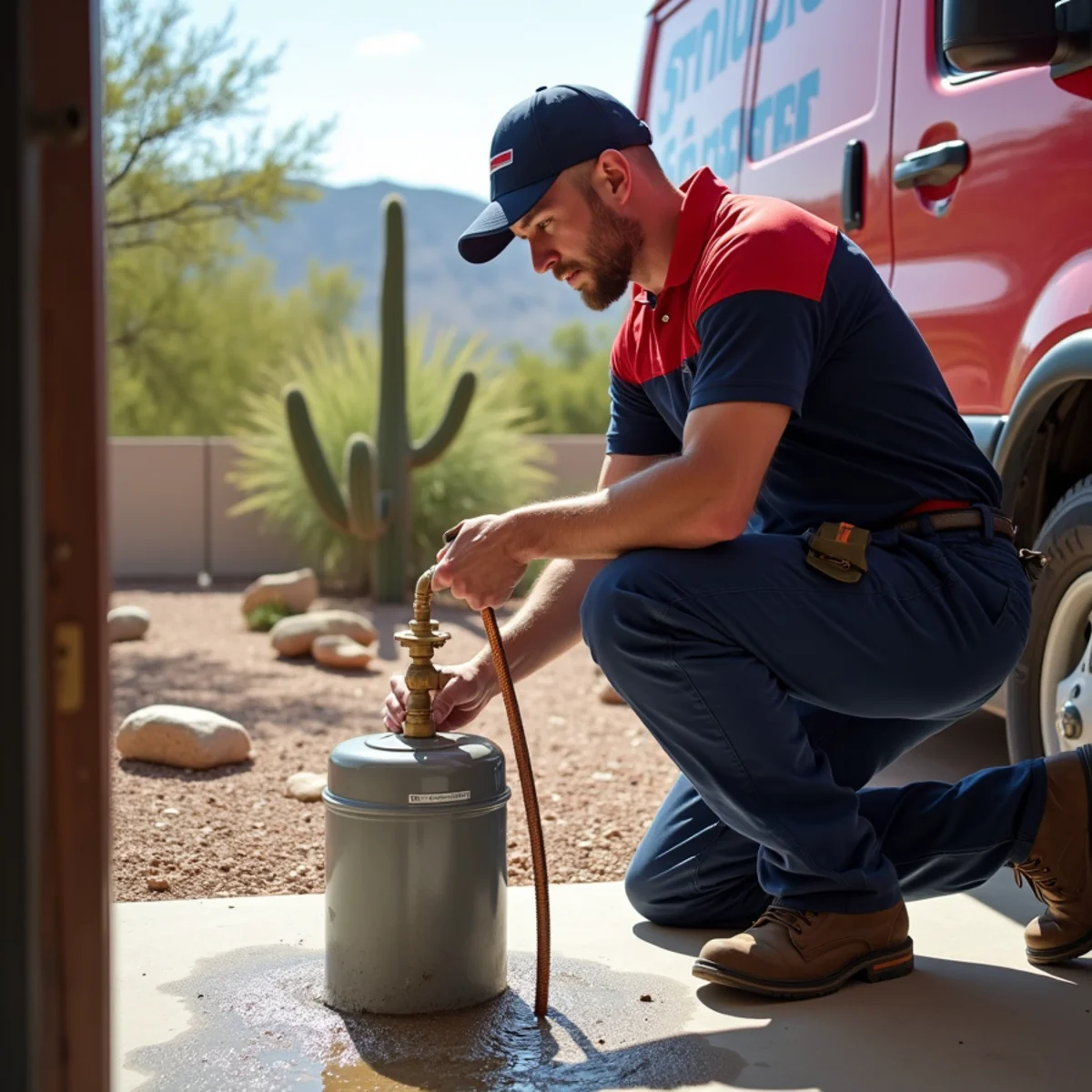
Sediment is what kills Phoenix water heaters early. Here is how flushing works, how to do it safely, and when to call a pro.
Key Takeaways
- Sediment from hard water is the top cause of early tank failure here.
- Turn off power/gas and the cold supply before draining.
- Never re-energize an electric element before the tank is full.
- Flush yearly; tankless units need descaling instead.
Flushing your water heater is the single most valuable maintenance task in a hard-water city like Phoenix. It removes the sediment that builds up in the tank, which is the leading reason valley water heaters fail before their time. Here is how it works and how to do it safely — or when to leave it to a pro.
Why Sediment Is the Enemy
Phoenix water carries 10.9–16.2 grains per gallon of dissolved minerals. When water heats, those minerals settle to the bottom of the tank as sediment. Over time that layer bakes onto the heating surface, insulating it so the burner or element works harder, wastes energy, makes rumbling or popping noises, and eventually damages the tank. Flushing clears it out before it does that harm.
How to Flush a Tank Water Heater
- 1Turn off the power (electric) or set the gas valve to "pilot" or off.
- 2Shut off the cold-water supply valve to the heater.
- 3Connect a garden hose to the drain valve at the bottom of the tank and run it to a floor drain or outside.
- 4Open a hot-water faucet in the house to relieve pressure and let air in.
- 5Open the drain valve and let the tank empty, watching for sediment in the water.
- 6Briefly open the cold-water supply to stir and flush out remaining sediment until the water runs clear.
- 7Close the drain valve, remove the hose, refill the tank fully (a hot faucet will sputter then run steady), and restore power or gas.
Never restore power to an electric heater before the tank is completely full — running the element dry will destroy it.
How Often to Flush in Phoenix
Because of the hard water, once a year is the minimum here, and heavily used homes or those without a softener may benefit from flushing more often. If it has been several years and you have never flushed the tank, the sediment may be significant — and a professional flush is worthwhile.
When to Call a Professional
Call a pro if the drain valve is stuck or leaking, if the water will not run clear, if you have a tankless unit (which needs descaling rather than flushing), or if you are simply not comfortable working around gas or electrical connections. It is also a good time to have the anode rod and safety valve checked.
Red Eagle Plumbing flushes tanks, descales tankless units, and checks the safety components — and can advise on a softener to slow sediment in the first place.
Doing It Safely — and When to Call a Pro
Flushing a tank is straightforward, but a couple of safety rules matter. Always turn off the power (electric) or set the gas valve to pilot or off before you start, and shut the cold-water supply. When you refill, never restore power to an electric heater before the tank is completely full — running the element dry will destroy it in seconds.
Watch what comes out. In a Phoenix heater that hasn't been flushed in a while, the water often runs cloudy with mineral sediment, then clears as it flushes out. If it never clears, or the drain valve is stuck or leaking, that's your cue to bring in a professional rather than forcing it.
It's also the right time to have the anode rod and relief valve checked — small components that quietly protect the tank. And if you've got a tankless unit, remember it's descaled, not flushed: a descaling solution is circulated through the heat exchanger to dissolve the mineral buildup our water leaves behind. Either way, doing it on schedule is what buys you the full lifespan.
How Often Should You Flush in Phoenix?
“Once a year” is the standard advice, but in a hard-water city the right interval depends on your water and your usage. Here is how to judge it for your home.
- Standard Phoenix homes: at least once a year
- Very hard water or heavy household use: consider every six months
- Homes without a water softener: flush more often, since sediment builds faster
- Tankless units: descale (not flush) on a regular schedule, typically annually
If you have never flushed the tank and it has been several years, the sediment load may be significant — the water can run heavily cloudy, and a professional flush is worthwhile to clear it safely. Pairing the heater with a softener is the real long-term answer: it slows sediment dramatically, so flushing stays a quick annual task rather than a battle against years of buildup. The more you stay ahead of it, the longer the heater lasts.
The Bottom Line for Phoenix Homeowners
Flushing your tank is the closest thing to a set-and-forget fix that Phoenix water allows — it clears the sediment that quietly destroys heaters here, and it takes under an hour. Just mind the safety steps, especially never energizing a dry electric element.
If the drain valve is stuck, the water won't clear, or you'd rather not work around gas and electrical, we're glad to handle it — and check the anode rod and relief valve while we're there. Call us to keep your heater on schedule.
What These Services Cost in Phoenix
Here are researched Phoenix ranges for the services related to this article, so you can plan before you call.
| Service | Typical Phoenix Range |
|---|---|
| Water Heaters | $800 – $2,000 |
| Tankless | $1,500 – $3,500 |
Educational ranges from published Phoenix sources — not a quote. Final cost depends on access, urgency, permits, equipment, and repair scope. Every job gets a written estimate.