
Water Heater Maintenance Checklist for AZ Hard Water
June 28, 2024 · 6 min read · By Red Eagle Plumbing
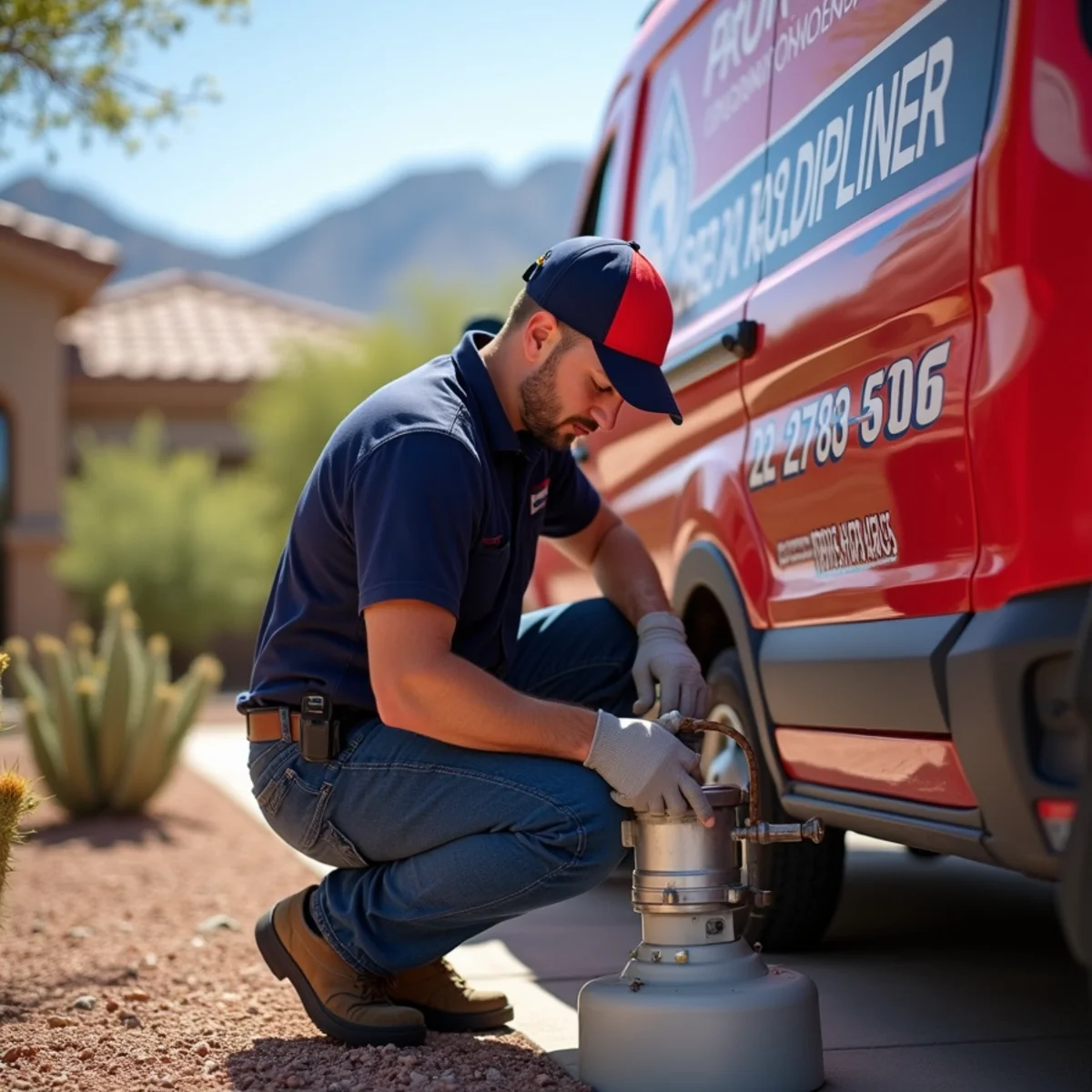
Arizona hard water shortens water-heater life. This maintenance checklist helps you get every year the unit is capable of.
Key Takeaways
- Flush the tank at least once a year to clear hard-water sediment.
- Test the T&P relief valve and check the anode rod periodically.
- Set the temperature around 120°F for safety and efficiency.
- Descale tankless units on schedule; a softener slows buildup.
A water heater is one of the hardest-working appliances in your home, and in Arizona it works against some of the hardest water in the country. A little regular maintenance goes a long way toward getting the full lifespan out of your unit — and avoiding the surprise of a cold shower or a leaking tank.
Why Maintenance Matters More in Arizona
Phoenix water runs 10.9–16.2 grains per gallon. Every time it is heated, minerals drop out and settle in the tank or coat a tankless heat exchanger. Left alone, that sediment insulates the heat source, drives up energy use, and shortens the unit’s life. Maintenance is simply staying ahead of that buildup.
Annual Maintenance Checklist
- Flush the tank: drain sediment from the bottom of the tank at least once a year (more often with very hard water).
- Test the T&P valve: check that the temperature-pressure relief valve operates freely — it is a critical safety device.
- Check the anode rod: this sacrificial rod protects the tank from corrosion; inspect it every few years and replace when depleted.
- Inspect connections: look for corrosion, moisture, or drips at the water and gas connections.
- Set a sensible temperature: around 120°F balances comfort, safety, and efficiency.
- Clear the area: keep the space around the heater clear and free of stored items.
The single most valuable habit for a Phoenix tank heater is an annual flush. Sediment is what kills valley water heaters early.
Tankless Units Need Descaling
If you have a tankless heater, the equivalent of flushing is descaling — circulating a descaling solution through the unit to dissolve mineral buildup on the heat exchanger. In Phoenix, this should be done on a regular schedule; skipping it is the fastest way to lose efficiency and shorten a tankless unit’s life.
The Best Protection: Soften the Water
Maintenance manages hard-water damage; a water softener prevents much of it in the first place. Pairing a softener with your water heater dramatically reduces scale, extends the unit’s life, and cuts the maintenance it needs. In this city, it is one of the best investments you can make in your plumbing.
Red Eagle Plumbing can flush your tank, descale your tankless unit, check the safety components, and advise on softening — all sized to Phoenix hard water.
The Maintenance Habit That Matters Most Here
If you do only one thing for your water heater in Phoenix, make it an annual flush. Our hard water deposits sediment faster than almost anywhere in the country, and that sediment is what quietly destroys tanks — insulating the burner, driving up energy use, and cracking the lining from the inside.
Beyond flushing, a few checks keep the unit safe and efficient: test the temperature-pressure relief valve to confirm it operates freely, inspect the sacrificial anode rod every few years and replace it when it's depleted, and keep the temperature around 120°F. Each takes minutes and heads off far more expensive failures.
Tankless owners have a parallel task: descaling. Because the heat exchanger scales quickly in our water, circulating a descaling solution on a regular schedule is essential to keep flow and efficiency where they should be. Pairing either type of heater with a softener slows the buildup in the first place — the closest thing to a set-and-forget fix Phoenix water allows.
Signs Your Water Heater Needs Service Now
Maintenance is best done on schedule, but certain symptoms mean your heater needs attention sooner rather than later. Catching these early prevents a cold-shower surprise or a flooded garage.
- Rumbling or popping sounds during heating — a classic sign of heavy sediment
- A drop in how much hot water you get before it runs cold
- Rusty or discolored hot water at the tap
- Water pooling or dampness around the base or connections
- A pilot that will not stay lit, or a breaker that keeps tripping
- Water that takes noticeably longer to heat than it used to
Most of these trace back to the same root cause in Phoenix: hard-water sediment insulating the burner or element and forcing the unit to work harder. Some are quick fixes caught early; others are the tank telling you it is near the end. If you are seeing several at once — especially rumbling plus reduced capacity — schedule service before a small problem becomes a replacement on the worst possible day.
The Bottom Line for Phoenix Homeowners
In a hard-water city like Phoenix, an annual flush is the single most valuable thing you can do for your water heater — and a few quick safety checks keep it running longer and safer. Maintenance manages the scale; a softener prevents much of it.
We flush tanks, descale tankless units, and check the safety components, then advise on softening where it makes sense. Call us to get your heater on a maintenance schedule built for valley water.
What These Services Cost in Phoenix
Here are researched Phoenix ranges for the services related to this article, so you can plan before you call.
| Service | Typical Phoenix Range |
|---|---|
| Water Heaters | $800 – $2,000 |
| Tankless | $1,500 – $3,500 |
Educational ranges from published Phoenix sources — not a quote. Final cost depends on access, urgency, permits, equipment, and repair scope. Every job gets a written estimate.