
Tankless vs. Tank Water Heaters in Arizona Heat
June 12, 2024 · 7 min read · By Red Eagle Plumbing
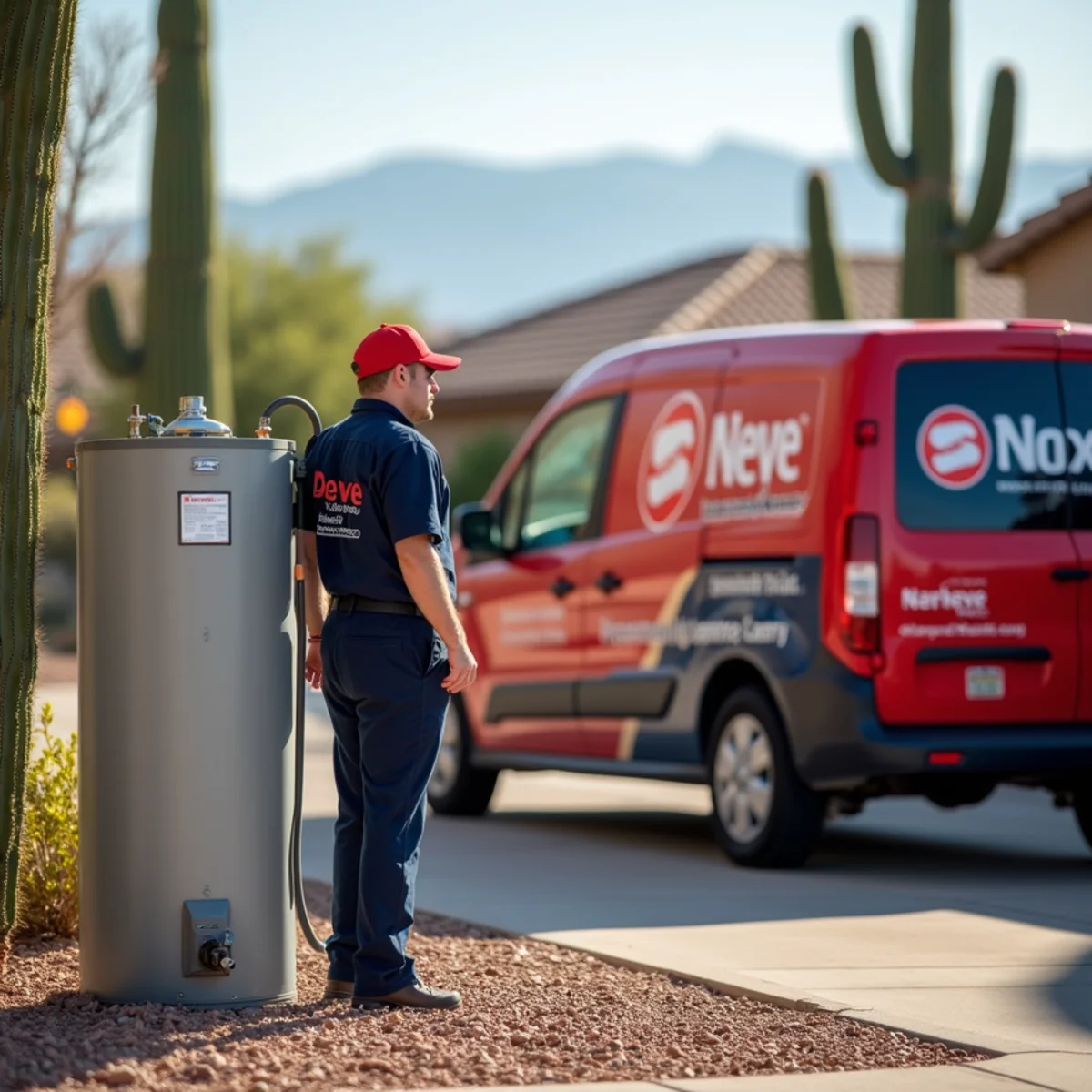
Tankless or traditional tank? For Arizona homes, the right answer depends on demand, budget, and how you handle hard water. Here is the honest comparison.
Key Takeaways
- Tankless gives endless hot water and can last 15–20 years.
- It costs more upfront but saves on standby energy over time.
- Phoenix's warm incoming water helps tankless efficiency.
- Hard-water scale management is essential for tankless here.
When it is time to replace a water heater, the tankless-vs-tank question comes up fast. Both are good options — the right one depends on your household, your budget, and how you plan to handle Arizona’s hard water. Here is an honest comparison, without the sales pitch.
How They Differ
A tank heater keeps 40–50+ gallons hot and ready at all times. A tankless unit heats water on demand as it flows through, so it never runs out and does not waste energy keeping a tank warm around the clock.
Upfront Cost
- Tank replacement: roughly $800–$2,000 installed.
- Tankless installation: roughly $1,500–$3,500, depending on gas and venting.
Tankless costs more upfront, partly because it may need gas-line or venting upgrades. Over time, lower standby energy use and a longer lifespan help close the gap.
Lifespan
A well-maintained tankless unit can last 15–20 years, roughly double a typical tank. In Arizona, that longevity is entirely dependent on managing hard-water scale — an ignored tankless unit can scale up and lose efficiency within a couple of years.
The Arizona Heat Advantage
Here is a point in tankless’s favor locally: Phoenix’s incoming water is warmer for much of the year, so a tankless unit does not have to work as hard to reach temperature as it would in a cold climate. That helps both flow rate and efficiency.
The Hard-Water Catch
Phoenix water runs 10.9–16.2 grains per gallon. Because a tankless unit heats water so intensely, minerals coat the heat exchanger faster than they scale a tank. The fix is straightforward — pair the unit with water treatment and descale it on a schedule — but it has to be part of the plan, not an afterthought.
Bottom line: tankless rewards higher-demand households that will maintain it. A right-sized tank remains the value pick for modest use.
Which Should You Choose?
- Choose tankless if: you have high or simultaneous hot-water demand, want endless hot water, value a longer lifespan, and will maintain it.
- Choose a tank if: your use is modest, upfront budget is the priority, or your home would need extensive gas/venting upgrades for tankless.
Red Eagle Plumbing installs both and sizes either to your actual demand. We will give you the honest recommendation for your home — and build hard-water protection into whichever you choose.
Making the Right Call for Your Household
The tankless-versus-tank decision comes down to how your household actually uses hot water, not to which technology is 'better.' A home that runs out during back-to-back showers, or wants to stop paying to keep 50 gallons hot around the clock, is a strong tankless candidate. A small household with modest, predictable use is often better served by a right-sized tank.
Phoenix tilts the math toward tankless in one real way: our incoming water is warmer for much of the year, so the unit doesn't have to work as hard to reach temperature as it would in a cold climate. That helps both flow rate and efficiency, and it's a genuine local advantage.
The one non-negotiable is scale. Because a tankless unit heats water so intensely, our hard water can coat the heat exchanger within a year or two if it's ignored — and a neglected tankless unit loses efficiency fast. Paired with water treatment and descaled on schedule, though, it delivers the long, efficient life that makes the upfront cost worth it.
Sizing and Installation: What to Plan For
Choosing tankless is only half the decision — sizing it and preparing your home are what make it perform. A unit that is undersized for your peak demand will disappoint, and an install that skips the prep work will not last.
- Peak demand: count the fixtures that might run hot water at once, not just total usage
- Gas supply: many tankless units need a larger gas line than a tank used
- Venting: tankless requires proper venting, which may differ from your old setup
- Electrical: some models need a dedicated circuit
- Scale protection: water treatment plus a descaling schedule is essential in our hard water
This is why a good installer assesses gas, venting, and electrical before quoting — surprises mid-install are how tankless projects go over budget. Done right, and paired with scale protection, a tankless unit delivers the endless hot water and long lifespan that justify the upfront cost. We size to your real peak demand and confirm all three utilities in the written estimate, so there are no surprises.
The Bottom Line for Phoenix Homeowners
There's no universal winner between tankless and tank — there's only the right choice for how your household uses hot water, your budget, and your willingness to maintain the unit. Phoenix's warm incoming water helps tankless, but hard-water scale management is non-negotiable.
We install and honestly recommend both, sized to your real demand and built to handle valley water. Call us for a free assessment and we'll give you the straight comparison for your home.
What These Services Cost in Phoenix
Here are researched Phoenix ranges for the services related to this article, so you can plan before you call.
| Service | Typical Phoenix Range |
|---|---|
| Tankless | $1,500 – $3,500 |
| Water Heaters | $800 – $2,000 |
Educational ranges from published Phoenix sources — not a quote. Final cost depends on access, urgency, permits, equipment, and repair scope. Every job gets a written estimate.