
Water Heater Leaking? Emergency Steps Before We Arrive
June 20, 2024 · 6 min read · By Red Eagle Plumbing
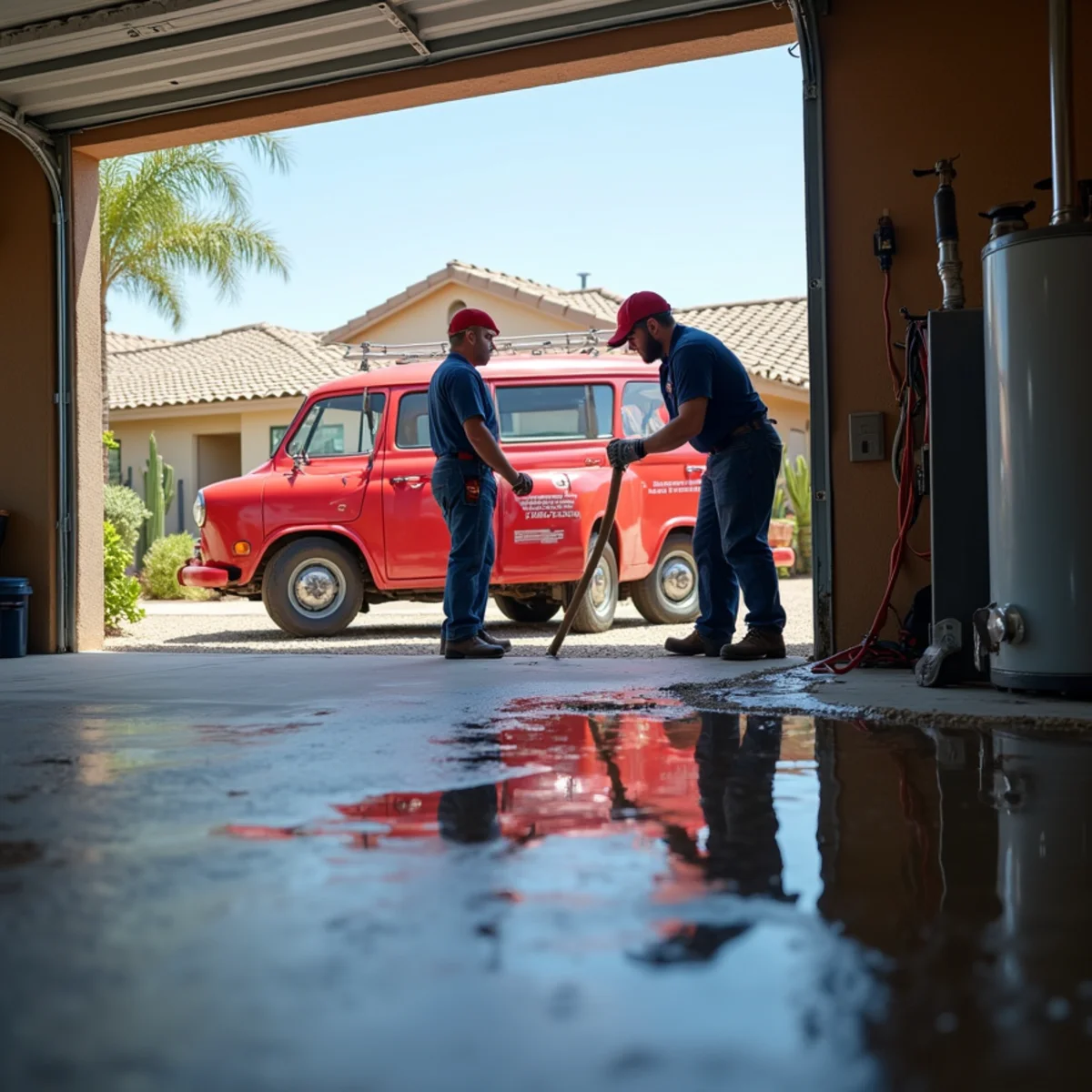
A leaking water heater can flood a garage or closet fast. Here are the safe steps to take right away — and how to tell whether it can be repaired.
Key Takeaways
- Turn off power (electric) or set the gas valve to off before touching a leaking heater.
- Shut off the cold-water supply valve on top of the tank to stop the leak feeding.
- A leak from the tank body means replacement; a leak at a fitting or valve is often repairable.
- Phoenix hard water drives the sediment that causes most early tank failures.
Finding water pooling around your water heater is alarming, but a calm, quick response limits the damage. Whether it is a slow seep or a tank that has let go, the steps are the same: make it safe, stop the water, and figure out the source.
Step 1: Turn Off the Power or Gas
For an electric water heater, switch off the breaker that feeds it. For a gas unit, turn the gas control valve to the "off" position. Never work around a leaking heater that still has power or gas running to it — and treat a heater leaking near electrical equipment as an immediate safety concern.
Step 2: Shut Off the Water to the Heater
There is a shutoff valve on the cold-water line entering the top of the tank. Turn it off to stop more water from feeding the leak. If that valve is stuck or you cannot find it, shut off the home’s main water supply instead.
Step 3: Document and Contain
Photograph the leak, the affected area, and the connections before cleanup. Move anything valuable out of the water’s path. If it is safe, you can drain the tank via the drain valve at the bottom to a floor drain or with a hose outside, which reduces the water still sitting in the tank.
Where the Leak Is Coming From Matters
The source tells us whether repair is possible:
- Leaking from a fitting or valve at the top: often a repairable connection or valve.
- Dripping from the temperature-pressure relief valve: may be a pressure issue or a valve replacement.
- Water seeping from the base of the tank itself: the tank is failing and needs replacement.
A tank leaking from the body itself cannot be repaired — the steel has corroded through. The fix is replacement.
Why Phoenix Water Heaters Leak Early
Phoenix hard water (roughly 10.9–16.2 grains per gallon) drives sediment to the bottom of the tank, where it bakes on, overheats the steel, and eventually cracks the glass lining. That is why so many valley heaters fail before their time. Pairing a new heater with a water softener and a regular flushing schedule is the single best way to make the next one last.
When you call Red Eagle Plumbing, we will confirm whether a repair will hold or replacement is the smarter spend, size the new unit correctly, and give you an upfront written estimate.
Why Phoenix Water Heaters Leak Sooner Than They Should
The single biggest reason valley water heaters fail early is sediment. Phoenix water carries 10.9 to 16.2 grains per gallon of dissolved minerals, and every time that water is heated, minerals settle to the bottom of the tank. Over time the layer bakes onto the steel, overheats it, and cracks the glass lining — which is when you find water on the garage floor.
That's why the timing of a leak tells us a lot. A heater that fails at six or seven years old, rather than ten to twelve, almost always shows heavy sediment when we drain it. An annual flush removes that sediment and is the single most valuable thing you can do to extend a tank's life here.
When you're choosing a replacement, this is the moment to address the water itself. Pairing a new heater with a softener dramatically slows scale, and it's why we so often recommend the two together in hard-water communities. Fixing the cause, not just the symptom, is what keeps you from buying another heater in half the expected time.
Repairable Leak or Failed Tank? How to Tell
Once the area is safe, a quick look at where the water is coming from tells you whether you are facing a simple repair or a replacement. It is worth checking before you call so you can describe it accurately.
- Leaking from the cold- or hot-water fittings on top: usually a connection or valve — often repairable
- Dripping from the temperature-pressure relief valve: a pressure issue or a valve replacement
- Water at the drain valve near the bottom: sometimes just a loose valve
- Water seeping from the base of the tank body: the tank has corroded through — replacement is the only fix
The last one is the important distinction: a tank leaking from its shell cannot be patched, because the steel has rusted from the inside out. If your unit is also past the eight-to-ten-year mark, replacement is almost always the smarter spend than a repair that buys a few months. When in doubt, describe the leak location when you call and we will tell you honestly which situation you are in.
The Bottom Line for Phoenix Homeowners
A leaking water heater is stressful, but a calm, quick response keeps it from becoming a flooded garage. Cut the power or gas, shut off the water to the tank, document the leak, and figure out whether the source is a repairable fitting or a failed tank.
When you're ready for an expert eye, we'll tell you honestly whether a repair will hold or replacement is the smarter spend — and size the new unit to protect it from the hard water that shortened the last one. Call any time; we answer 24/7.
What These Services Cost in Phoenix
Here are researched Phoenix ranges for the services related to this article, so you can plan before you call.
| Service | Typical Phoenix Range |
|---|---|
| Water Heaters | $800 – $2,000 |
| Emergency | $145 – $285 / hr |
Educational ranges from published Phoenix sources — not a quote. Final cost depends on access, urgency, permits, equipment, and repair scope. Every job gets a written estimate.