
Monsoon Season Plumbing: Protecting Your Valley Home
June 1, 2024 · 6 min read · By Red Eagle Plumbing
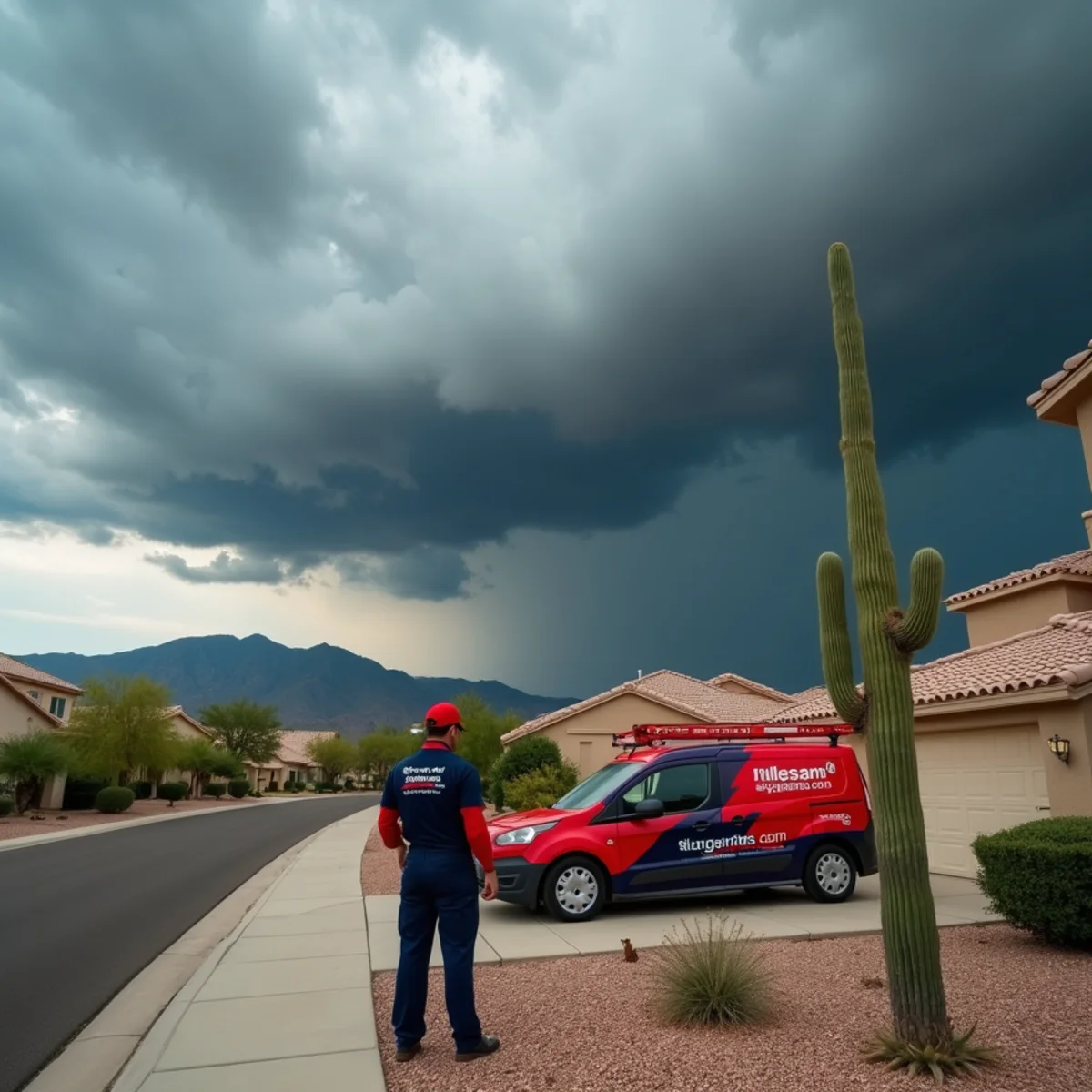
Arizona’s monsoon runs June 15 to September 30. Here is how to prepare your plumbing for the storms — and what to do if water gets in.
Key Takeaways
- Monsoon season runs roughly June 15–September 30.
- Hard-baked ground sheds water fast, overwhelming drains and stressing lines.
- A pre-monsoon check of your shutoff, drains, and cleanouts prevents most emergencies.
- Address water damage within 24–48 hours to limit mold.
Arizona’s monsoon season — roughly June 15 to September 30 — brings sudden, heavy storms to a landscape built for dry heat. The combination of intense rain, hard-baked ground that sheds water, and aging plumbing makes this the season for backups and water intrusion. A little preparation goes a long way.
Why Monsoons Stress Plumbing
Phoenix ground does not absorb water quickly. When a storm dumps an inch of rain in an hour, that water runs off fast, overwhelming drainage and finding its way toward low points — including around foundations and into any weak point in your system. Heavy runoff can also push debris into drains and stress sewer lines already compromised by roots or cracks.
Before the Storms: A Pre-Monsoon Checklist
- Find and test your main water shutoff so you can act fast in an emergency.
- Clear accessible drains and locate your sewer cleanouts before heavy weather.
- Inspect aging supply lines, water-heater connections, hose bibs, and exposed valves.
- Address any drain that is already slow — storms make marginal lines back up.
- Ask whether a pre-monsoon inspection makes sense for your property.
- Save your plumber’s number where household members can find it.
The best time to fix a slow drain or a marginal sewer line is before the first big storm, not during it.
During a Storm: If Water Gets In
If you experience a backup or intrusion, stop using water fixtures, keep people and pets away from any standing water near electrical equipment, and document the damage with photos before cleanup. Remember that per EPA guidance, water damage should generally be addressed within 24–48 hours to limit mold — and in monsoon humidity and heat, mold moves fast.
Sewer Backups Spike in Monsoon Season
Heavy rain can infiltrate cracked sewer laterals and push root-clogged lines over the edge. If your drains have gurgled or backed up before, a camera inspection ahead of monsoon season can catch the problem before a storm turns it into an emergency.
Red Eagle Plumbing helps valley homeowners prepare for monsoon season and responds 24/7 when storms cause trouble.
Preparing Your Valley Home Before the Storms Hit
Monsoon storms catch Phoenix plumbing off guard because our landscape isn't built to absorb sudden water. When an inch of rain falls in an hour, it runs off fast, overwhelms drainage, and finds every weak point — including cracked sewer laterals and marginal drains that were 'fine' all spring.
The best defense is a short pre-monsoon checklist done in late spring: locate and test your main water shutoff, clear any drain that's already running slow, find your sewer cleanouts, and inspect aging supply lines and hose-bib connections. Fixing a marginal drain before a storm is far cheaper than clearing a backup during one.
If water does get in, move fast. Per EPA guidance, water damage should generally be addressed within 24 to 48 hours to limit mold, and in monsoon humidity and valley heat that window is real. Stop the source, document the damage, and keep the plumbing repair separate from the drying and restoration work that follows.
Your Pre-Monsoon Plumbing Checklist
Late spring is the time to get ahead of monsoon season. Working through this checklist before the first storm prevents the majority of the backups and intrusions we respond to from June through September.
- 1Locate and test your main water shutoff so you can act fast in an emergency
- 2Clear any drain that is already running slow — storms push marginal lines over the edge
- 3Find your sewer cleanouts and make sure they are accessible
- 4Inspect aging supply lines, hose bibs, and water-heater connections
- 5Schedule a camera inspection if your drains have gurgled or backed up before
- 6Save your plumber’s number where household members can find it
The theme is simple: fix the marginal stuff before the storm finds it. A drain that is merely slow in May will back up during a July downpour, and a cracked sewer lateral will take on stormwater it cannot handle. An hour of preparation in spring is far cheaper than an emergency call during a monsoon, when everyone else is calling too.
The Bottom Line for Phoenix Homeowners
Monsoon season tests every weak point in a Phoenix plumbing system, and the homes that come through it best are the ones prepared before the first storm. A short pre-monsoon checklist prevents most of the emergencies we see from June through September.
We help valley homeowners prep for monsoon season and respond 24/7 when storms cause trouble. Call us for a pre-monsoon inspection, or the moment a storm causes a backup or intrusion — the faster the source is stopped, the less the damage.
What These Services Cost in Phoenix
Here are researched Phoenix ranges for the services related to this article, so you can plan before you call.
| Service | Typical Phoenix Range |
|---|---|
| Emergency | $145 – $285 / hr |
| Sewer Lines | $1,000 – $5,000+ |
Educational ranges from published Phoenix sources — not a quote. Final cost depends on access, urgency, permits, equipment, and repair scope. Every job gets a written estimate.