
Why Phoenix Hard Water Destroys Water Heaters & Pipes
May 8, 2024 · 7 min read · By Red Eagle Plumbing
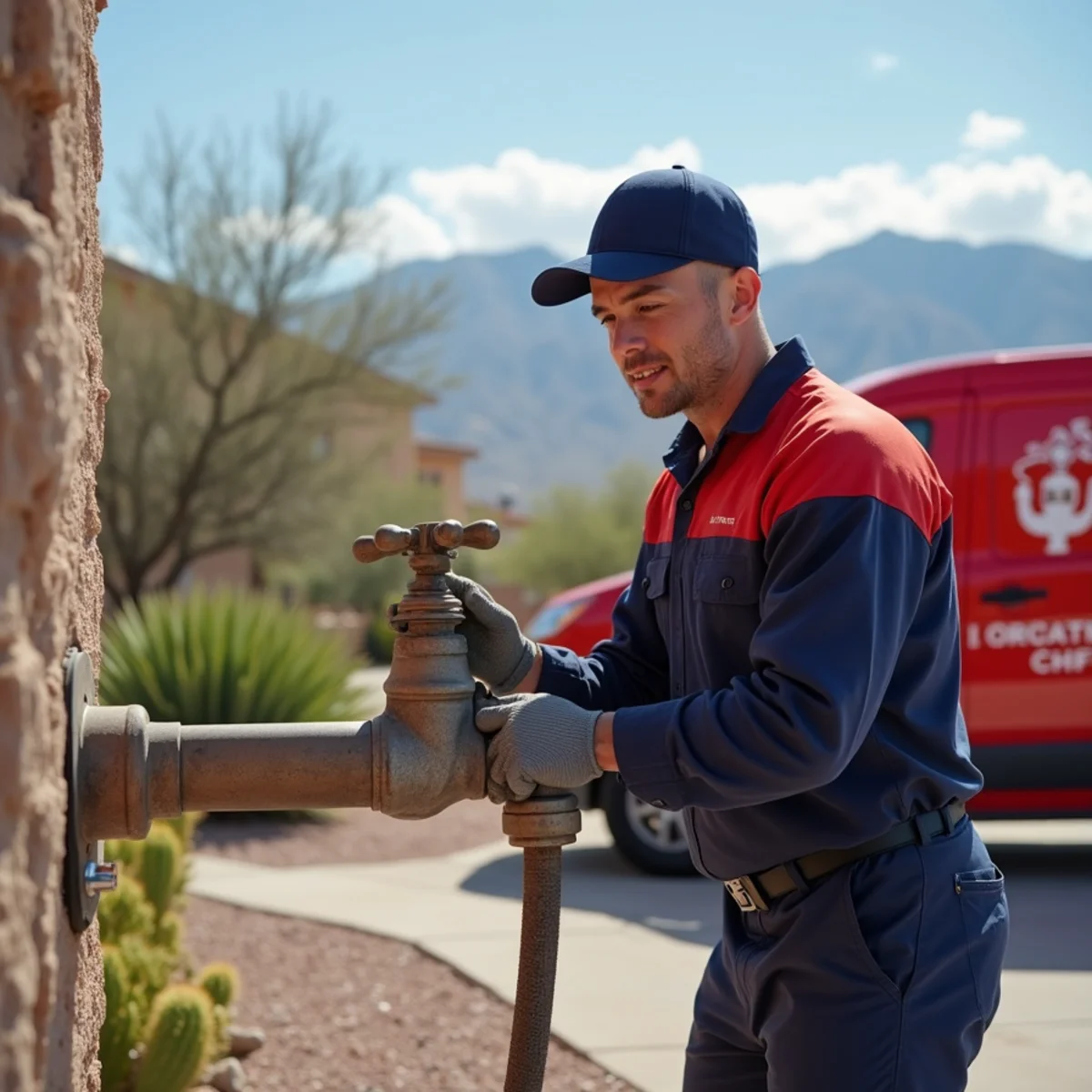
Phoenix has some of the hardest water in the country. Here is what those minerals do to your plumbing — and how to stop the damage.
Key Takeaways
- Phoenix water runs 10.9–16.2 grains per gallon — among the hardest in the U.S.
- Scale bakes onto water-heater components and shortens their life.
- It narrows pipes, clogs fixtures, and spots glassware.
- A whole-home softener protects heaters, pipes, and fixtures at once.
If you live in Phoenix, you have seen it: white scale on the faucets, spots on the glassware, film in the shower. That is hard water, and it is not just a cosmetic nuisance — it is a slow, expensive tax on your entire plumbing system. Understanding it helps you protect your home.
How Hard Is Phoenix Water?
Phoenix water hardness is reported at roughly 10.9 to 16.2 grains per gallon. That is well into the "very hard" range — among the hardest municipal water in the country. Those grains are dissolved calcium and magnesium, and when water is heated or evaporates, they drop out as solid scale.
What It Does to Your Water Heater
This is where hard water costs the most. As water heats, minerals settle to the bottom of the tank and bake onto the heating surface. That scale layer insulates the burner or element, so the heater runs longer and hotter, wastes energy, and eventually cracks the glass lining. It is a leading reason valley water heaters fail years before they should. On tankless units, the same minerals coat the heat exchanger and choke flow.
Many Phoenix homeowners replace a water heater every 6–8 years instead of 10–12 — hard water is usually why.
What It Does to Pipes and Fixtures
- Scale narrows pipes over time, reducing flow and pressure.
- Aerators and showerheads clog with mineral buildup, weakening flow.
- Faucet cartridges and toilet internals wear out and stick faster.
- Fixtures and glass show permanent spotting and etching.
- Soap does not lather well, so you use more of everything.
How to Protect Your Home
The most effective solution is a water softener, which removes the hardness minerals before they reach your plumbing. A properly sized softener protects your water heater, pipes, and fixtures all at once — and it is why softening is one of the best-value upgrades in this city, especially in the hardest-water communities like Gilbert, Queen Creek, and Surprise.
Beyond softening, regular maintenance helps: flushing a tank water heater on a schedule, descaling a tankless unit, and cleaning aerators and fixture screens. If hard water has already cost you a heater or a fixture, treating the water is how you stop the cycle.
Red Eagle Plumbing sizes and installs softeners matched to your household and water, and we build hard-water protection into every water-heater install.
The Real Cost of Ignoring Hard Water
Hard water is easy to dismiss as a cosmetic nuisance — spots on the glasses, film in the shower — but in Phoenix it's a slow, compounding tax on your plumbing. The minerals that leave those spots also settle inside your water heater, coat the heat exchanger of a tankless unit, and gradually narrow your supply lines.
The clearest example is water heaters. Many valley homeowners replace one every six to eight years instead of the ten to twelve you'd expect elsewhere, and hard-water scale is almost always why. Multiply that across fixtures, aerators, toilet internals, and appliances, and the untreated-water cost adds up quickly.
A properly sized softener addresses all of it at once, which is why it's one of the best-value upgrades in this city — especially in the hardest-water communities like Gilbert, Queen Creek, Surprise, and San Tan Valley. If hard water has already cost you a heater or a fixture, treating the water is how you stop paying that tax again and again.
Softener vs. Filtration: What Each One Does
Homeowners often use “softener” and “filter” interchangeably, but they solve different problems. Knowing the difference helps you buy only what your water actually needs.
- A water softener removes the hardness minerals (calcium and magnesium) that cause scale — protecting heaters, pipes, and fixtures
- A filtration system targets taste, odor, chlorine, sediment, or specific contaminants — improving the water you drink and cook with
- Many Phoenix homes benefit from both: a softener for the plumbing, filtration for the tap
If your main complaints are scale on fixtures, spotty glassware, and a water heater that failed early, a softener is the answer — that is a hardness problem. If it is taste, odor, or drinking-water quality you are after, that is filtration. We assess your water and household and recommend only what solves your actual issue, rather than selling a system you do not need.
The Bottom Line for Phoenix Homeowners
Hard water is a slow, compounding cost in Phoenix — it shortens water-heater life, narrows pipes, and wears out fixtures across the whole home. Treating it is one of the highest-value plumbing decisions a valley homeowner can make.
We size and install softeners matched to your water and household, and build hard-water protection into every water-heater job. If you're tired of replacing scaled-up fixtures and heaters, call us — treating the water is how you stop the cycle.
What These Services Cost in Phoenix
Here are researched Phoenix ranges for the services related to this article, so you can plan before you call.
| Service | Typical Phoenix Range |
|---|---|
| Water Heaters | $800 – $2,000 |
| Tankless | $1,500 – $3,500 |
Educational ranges from published Phoenix sources — not a quote. Final cost depends on access, urgency, permits, equipment, and repair scope. Every job gets a written estimate.
Related Plumbing Services
Serving Gilbert, Queen Creek and the greater Phoenix area.